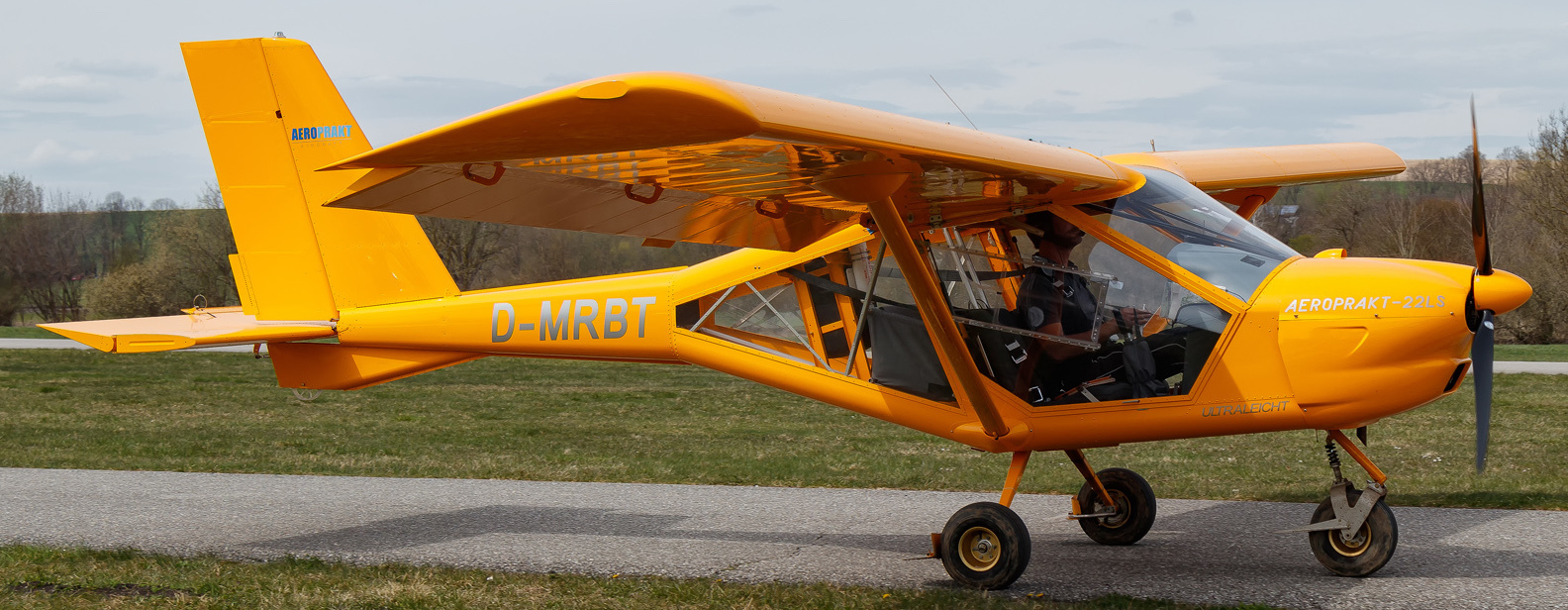
For us, weather is not a side issue but half the flight. Here I collect the basics – in brief, with my own drawings and, in each case, the part that really matters at the airfield.
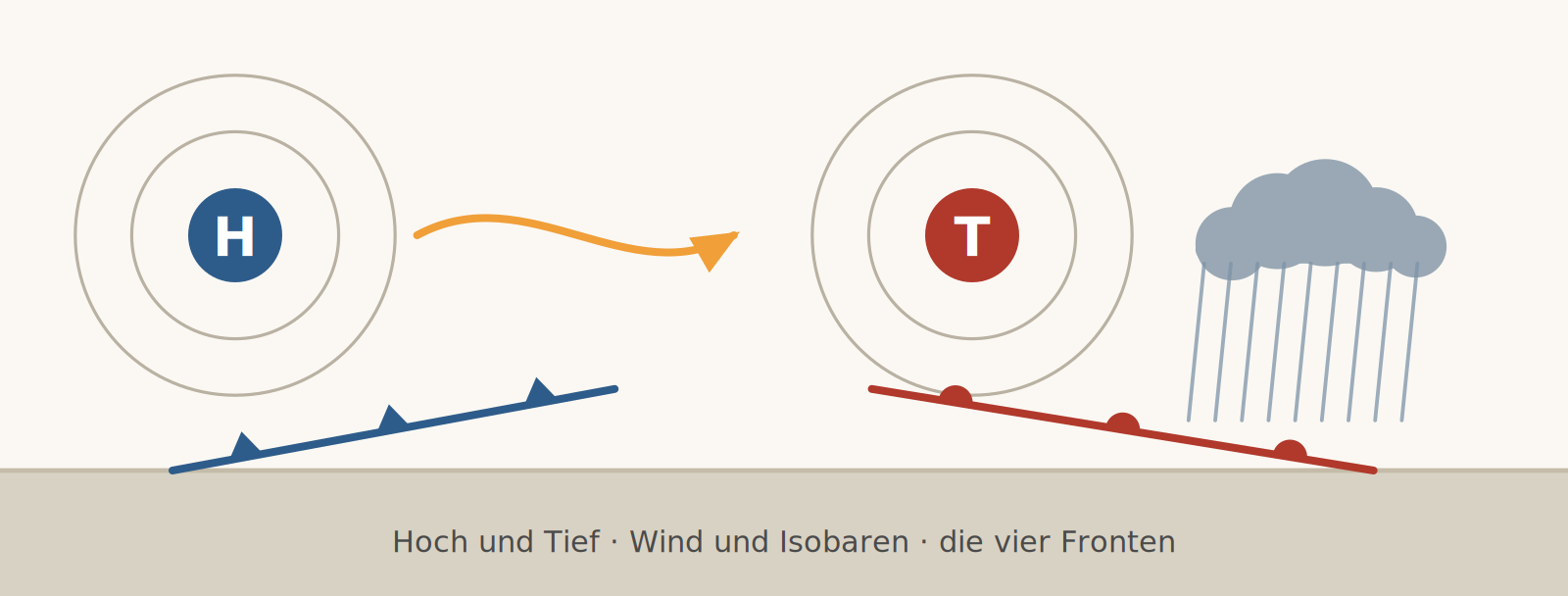
The basics
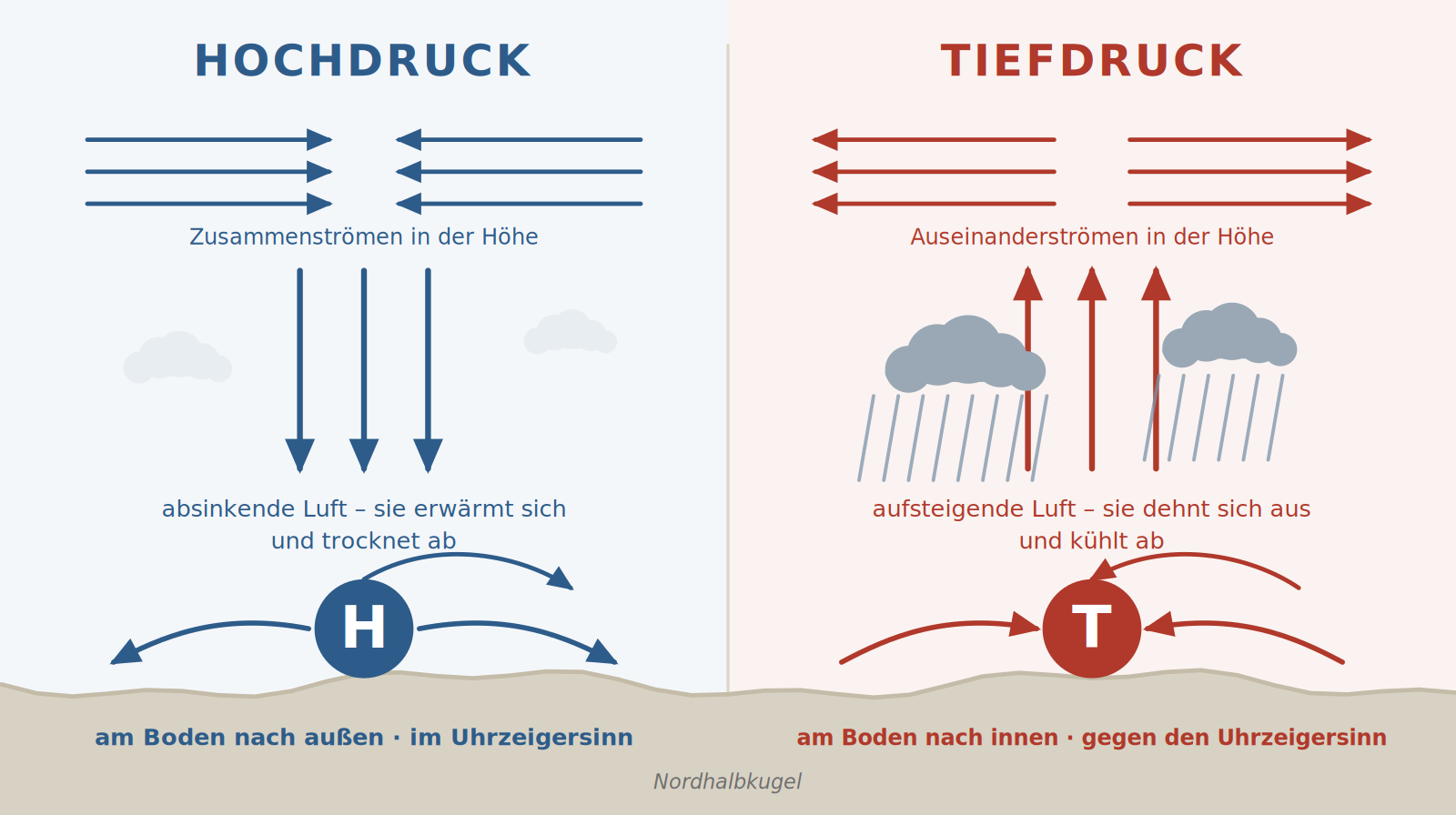
Highs and Lows
Why sinking air dissolves clouds and rising air makes them – and why a high can still be grey in winter.
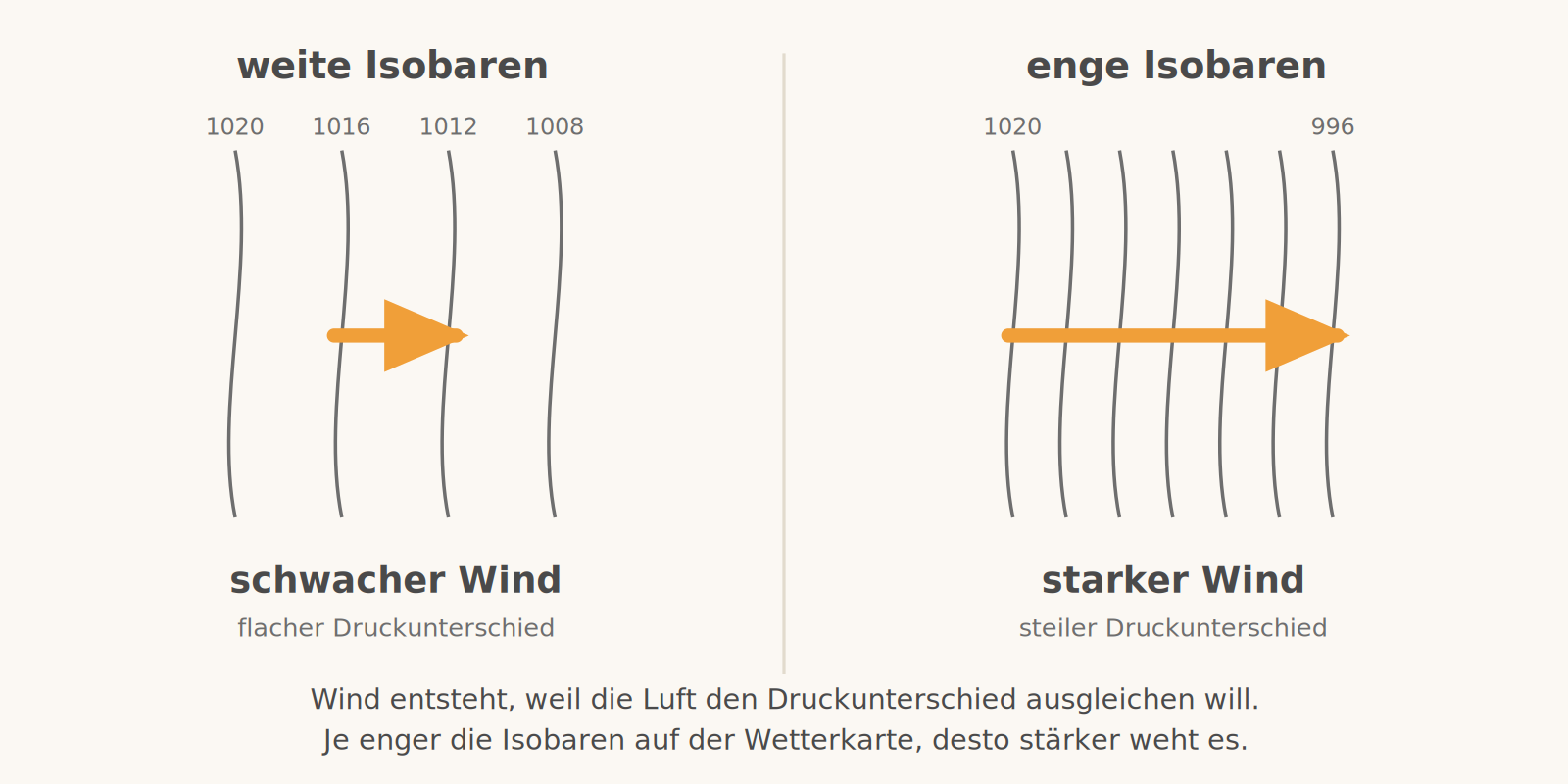
Wind, Isobars and the Coriolis Force
Where the wind comes from, why it flows around the pressure systems and what the spacing of the isobars tells you about the day.
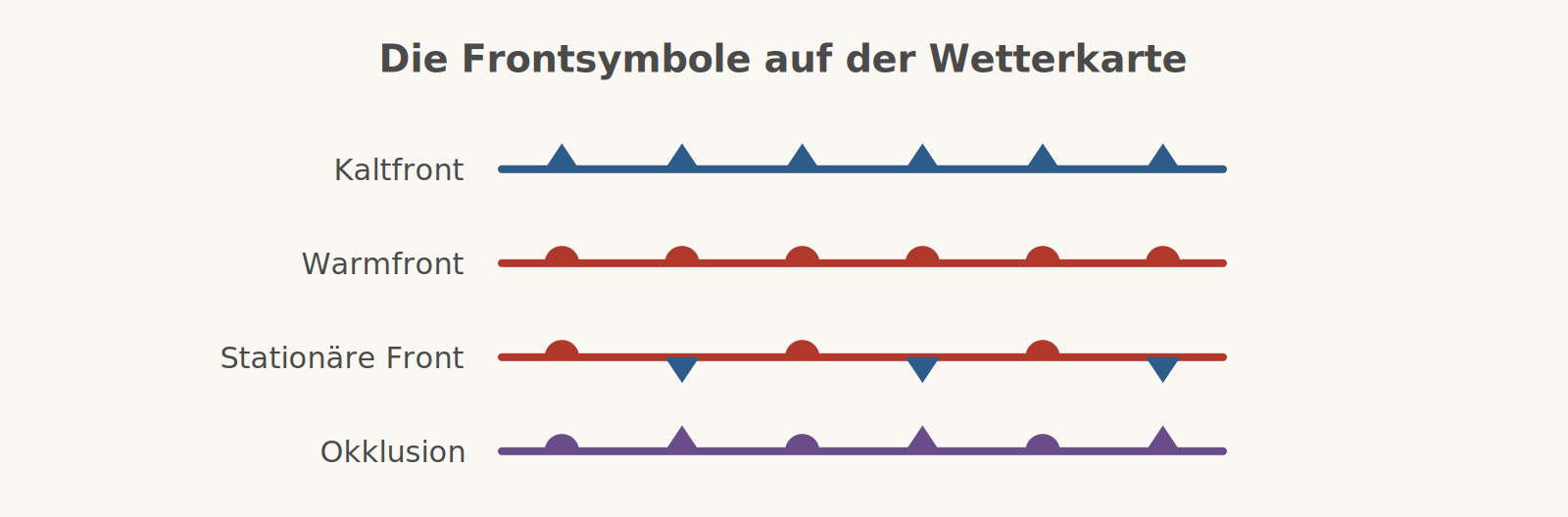
The Four Fronts
Cold front, warm front, stationary front and occlusion – how to recognise them and what they do at the airfield.
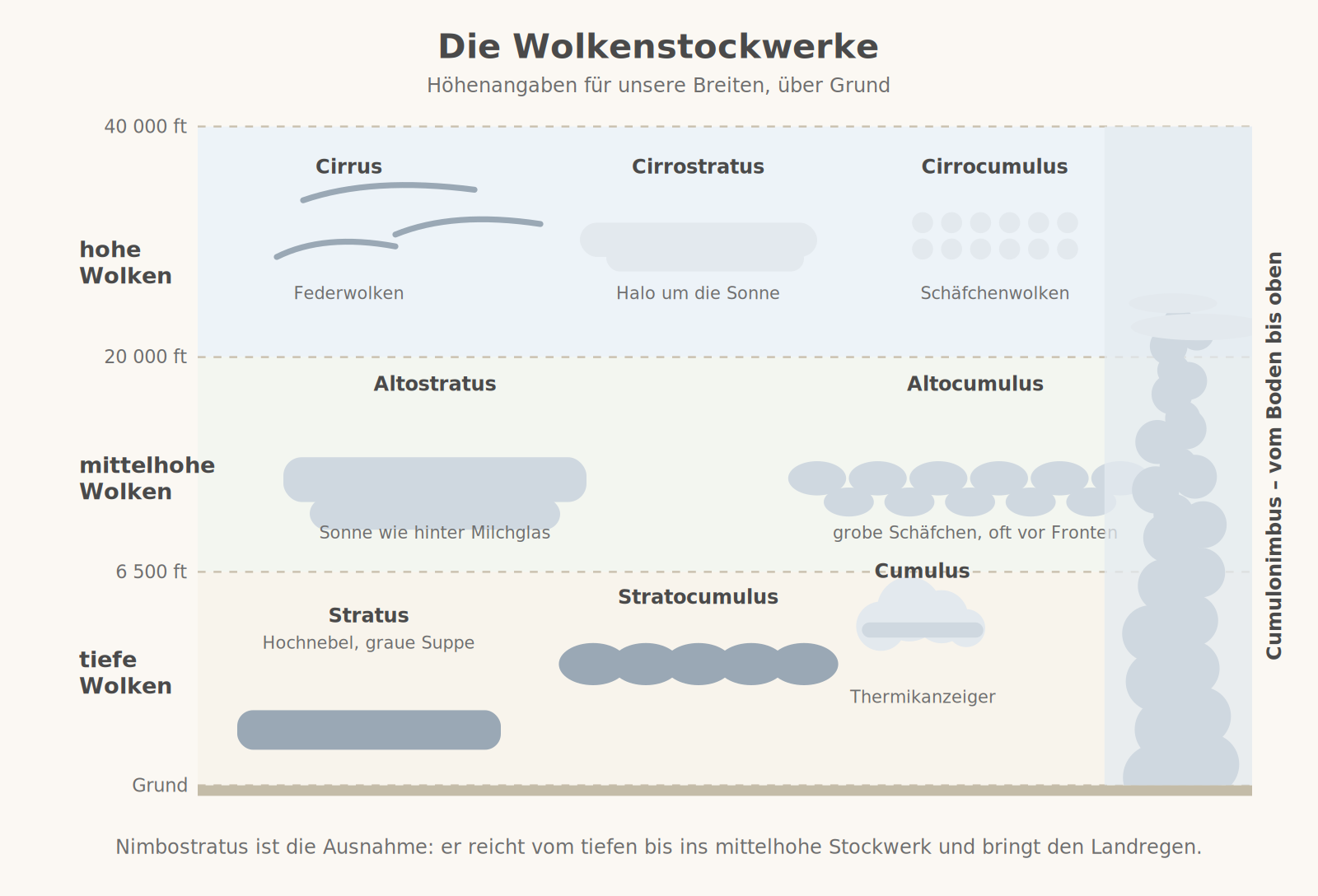
Reading Clouds
The three levels and what each cloud type tells you about the coming day – from cirrus to the anvil.
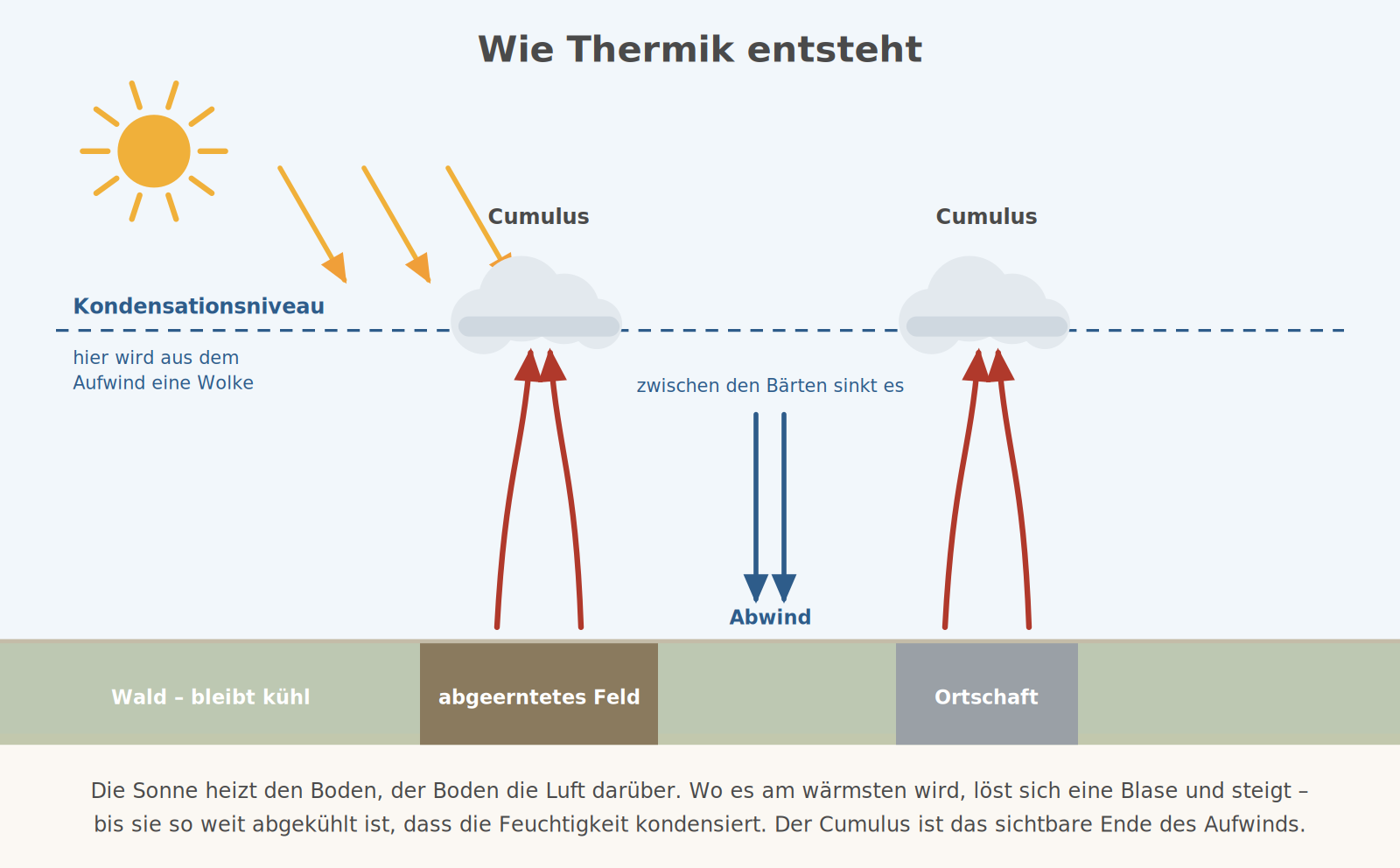
Thermals and Instability
How sun, ground and a temperature difference turn into an updraught – and why on some days it simply does not work.
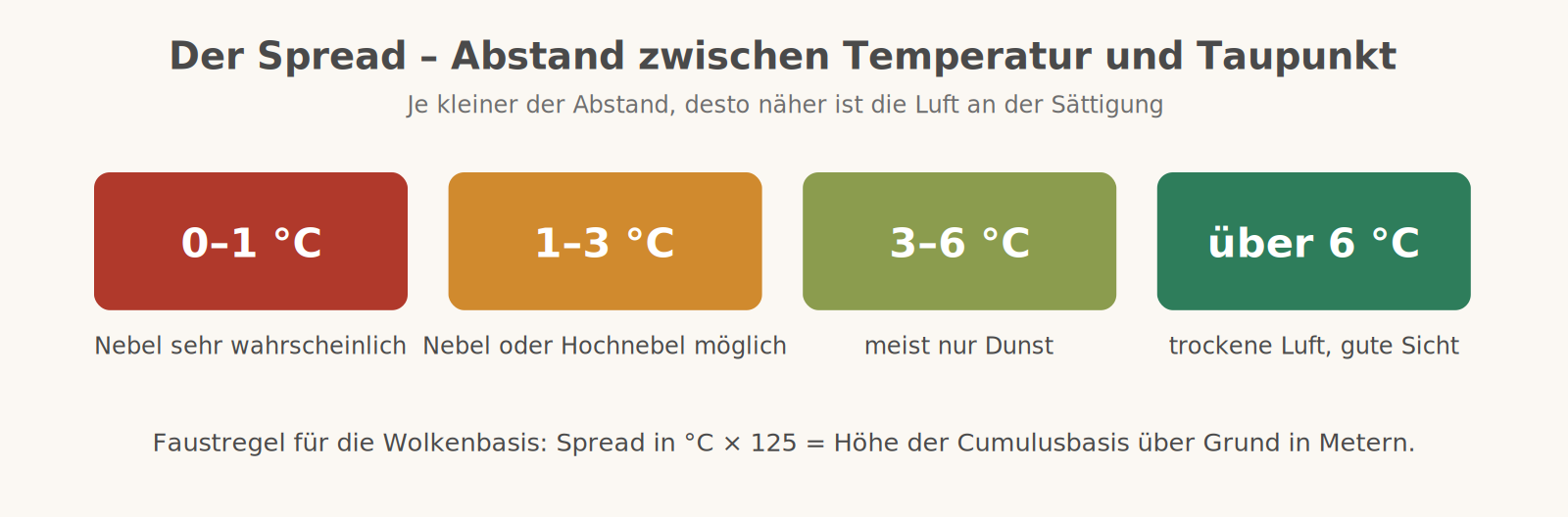
Fog and Visibility
Dew point, spread and the question of whether the airfield will be clear in the morning – and again in the evening.
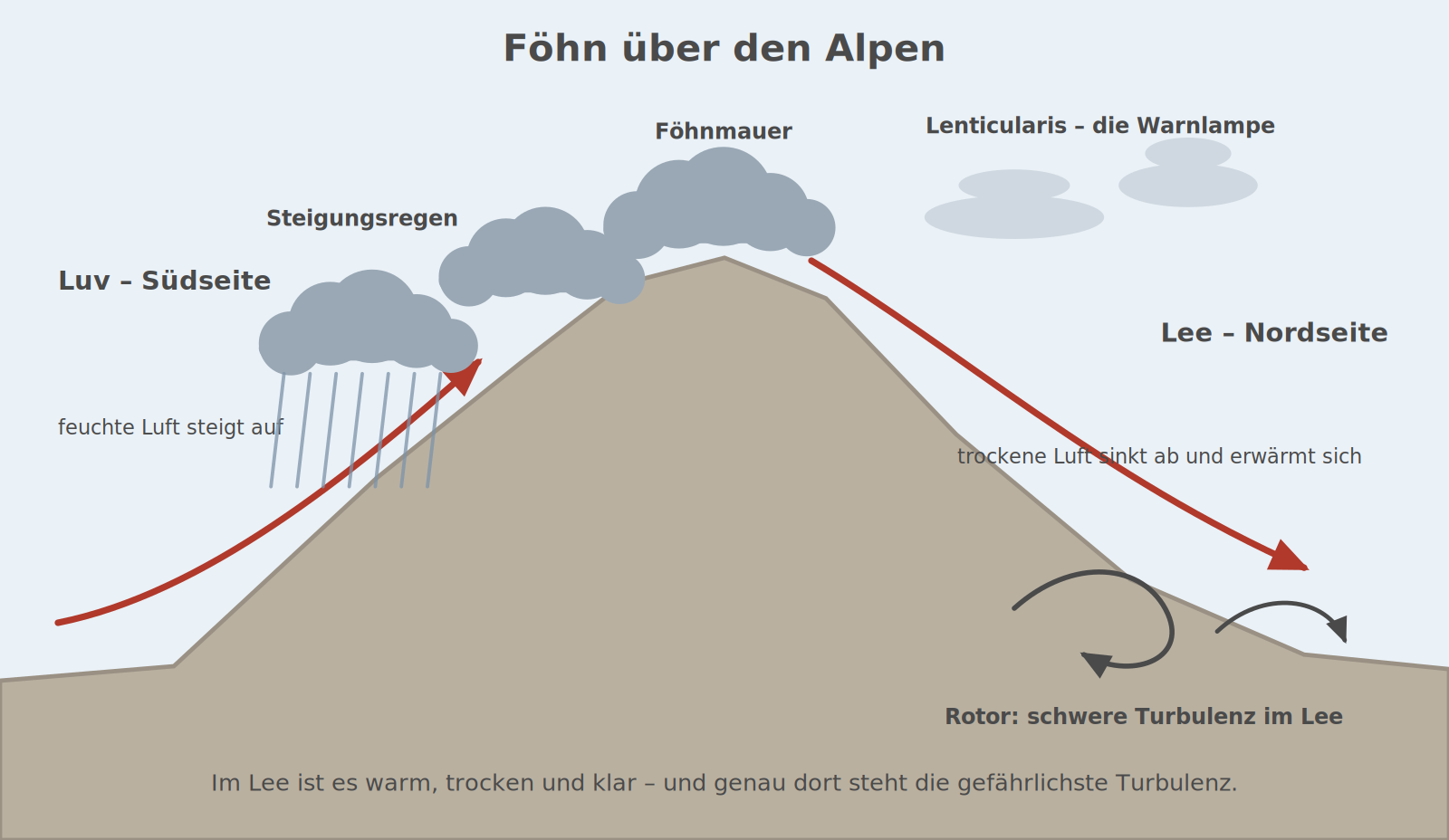
Foehn and Valley Winds
The two wind systems of the Alps: the invisible storm in the clearest visibility and the daily up and down in the valley.
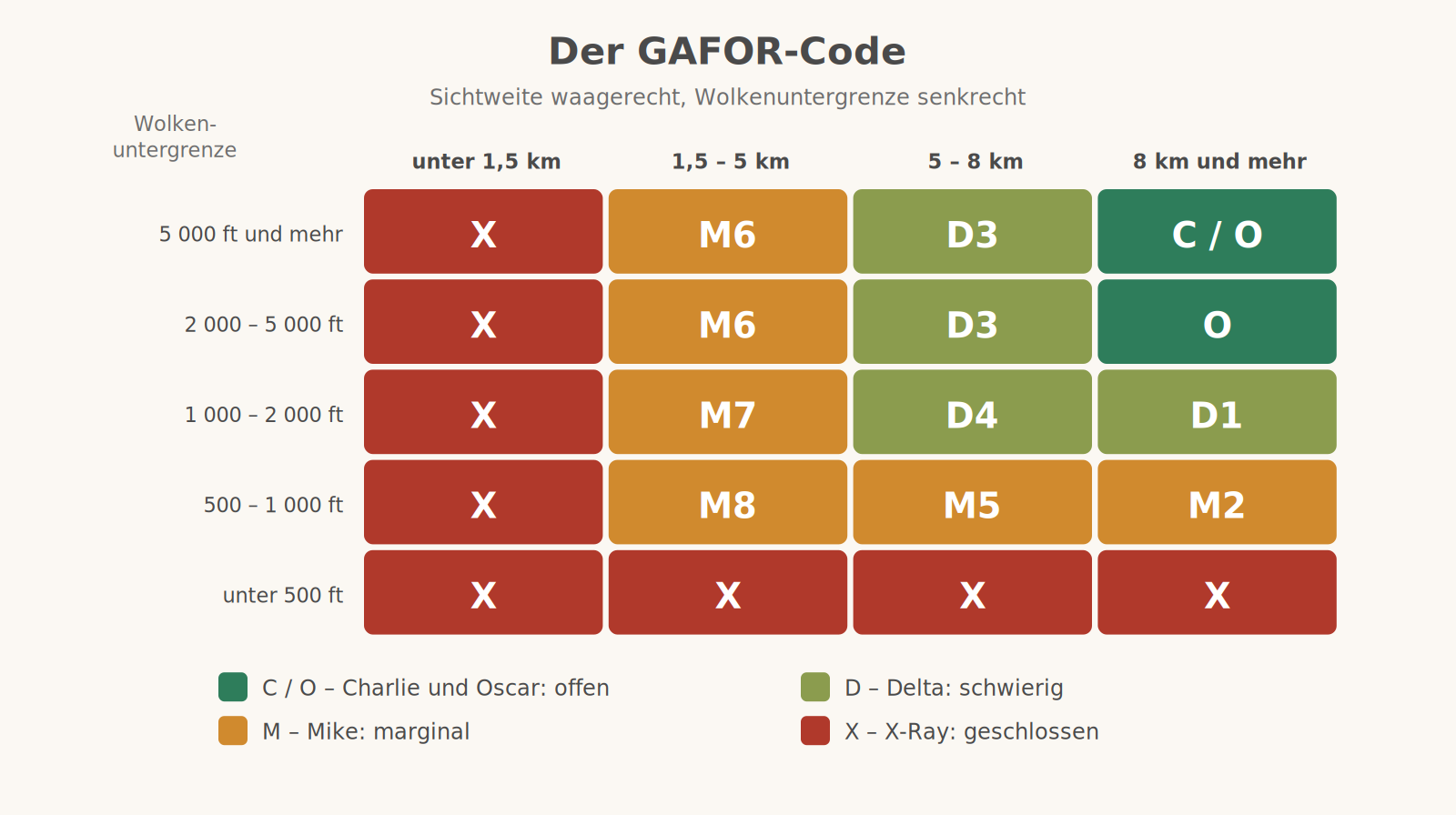
The Weather Briefing
GAFOR, METAR and TAF decoded – and in which order to look at them before take-off.
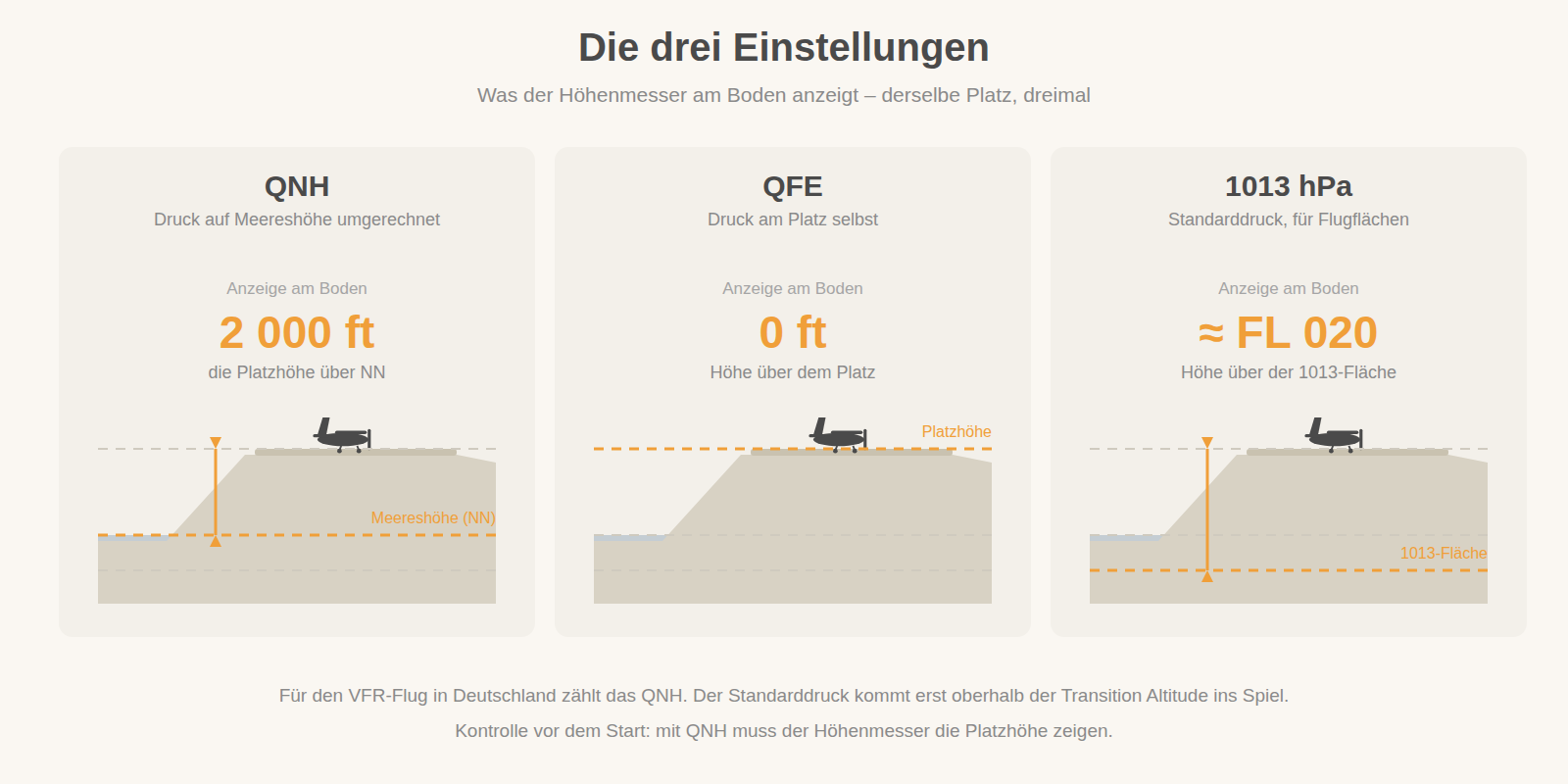
Altimeter and Air Pressure
QNH, QFE and 1013 hPa – and why the altimeter reads too high when pressure falls and the air is cold.
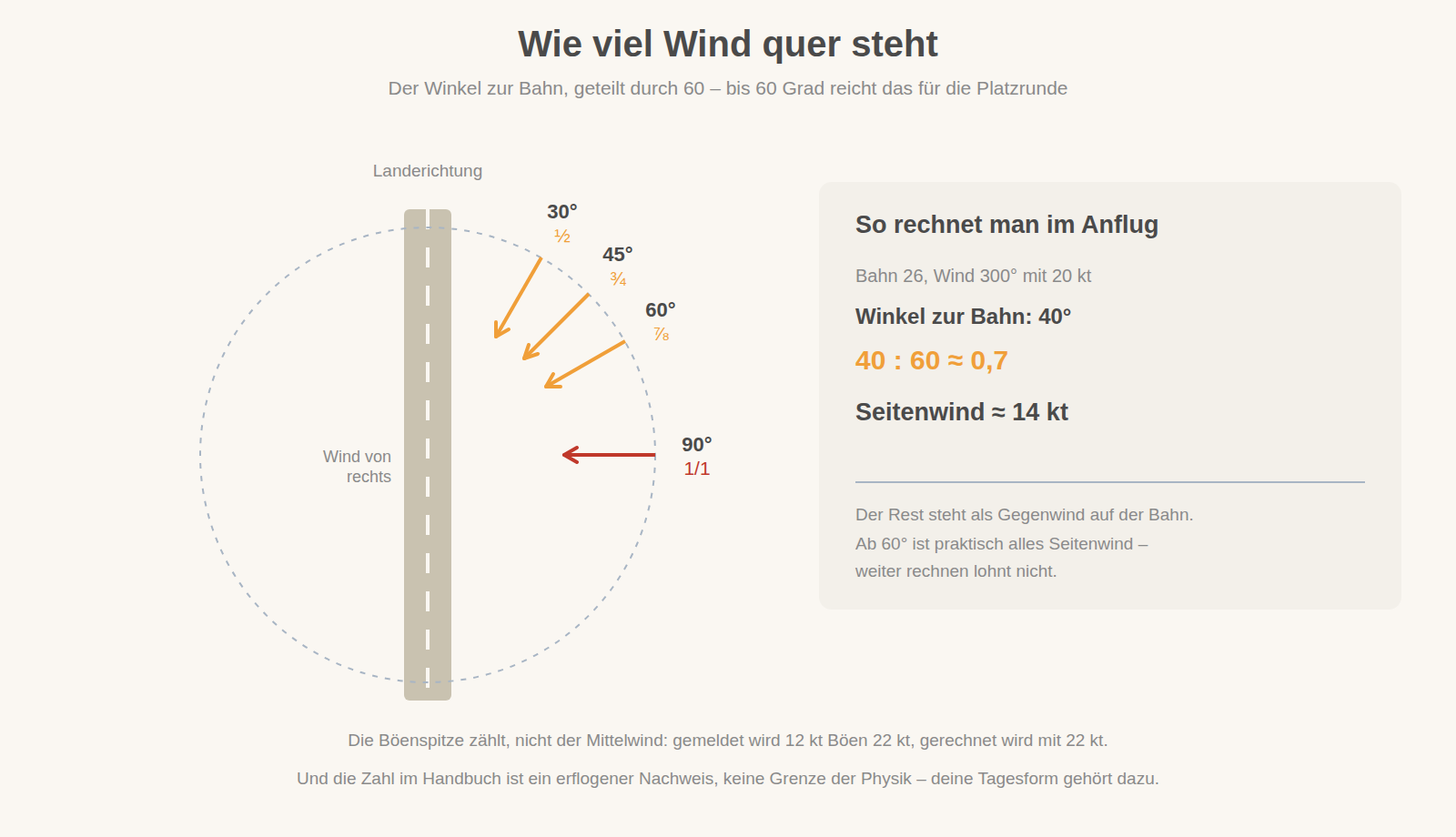
Wind at the Airfield
Estimating crosswind, adding gusts to the approach speed and the turbulent air behind hangars and tree lines.
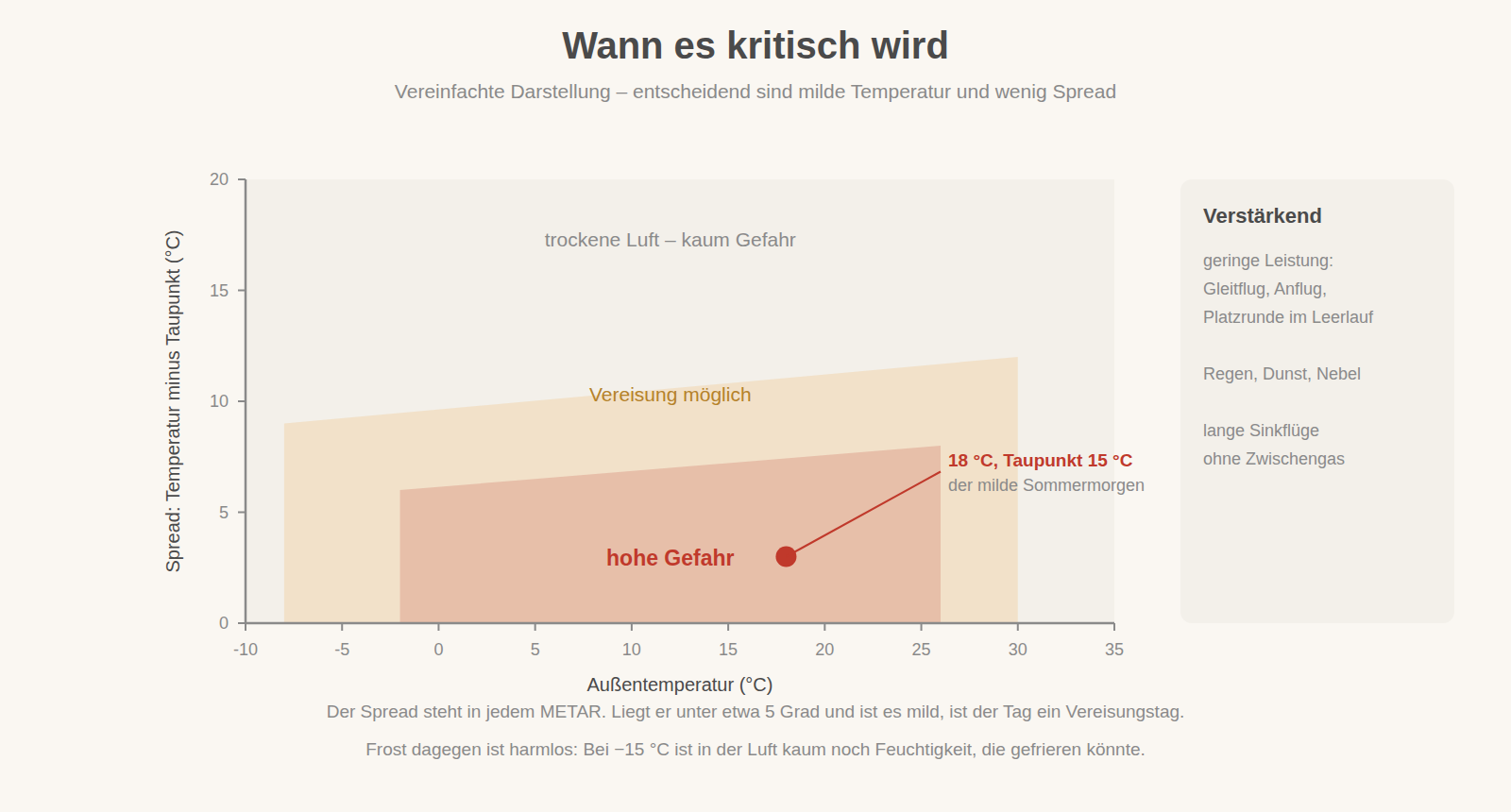
Carburettor Icing
The weather problem in the engine bay: mild, humid, inconspicuous – and without warning.
How it all fits together
The first three pages explain the machinery: pressure systems, wind and fronts. The next three show how to read the result – in the clouds, in the thermals, in the visibility. Then comes what dominates everything in the Alpine foothills, and the translation of it all into the numbers that are on the table before take-off. Finally, the last three pages leave meteorology behind and go where the weather meets the aircraft: the altimeter, the traffic circuit and the carburettor.
The drawings on these pages are my own. They are deliberately schematic – reality rarely sticks so closely to the textbook. For flight planning, the official aviation weather briefing always applies. The labels in the drawings are in German.