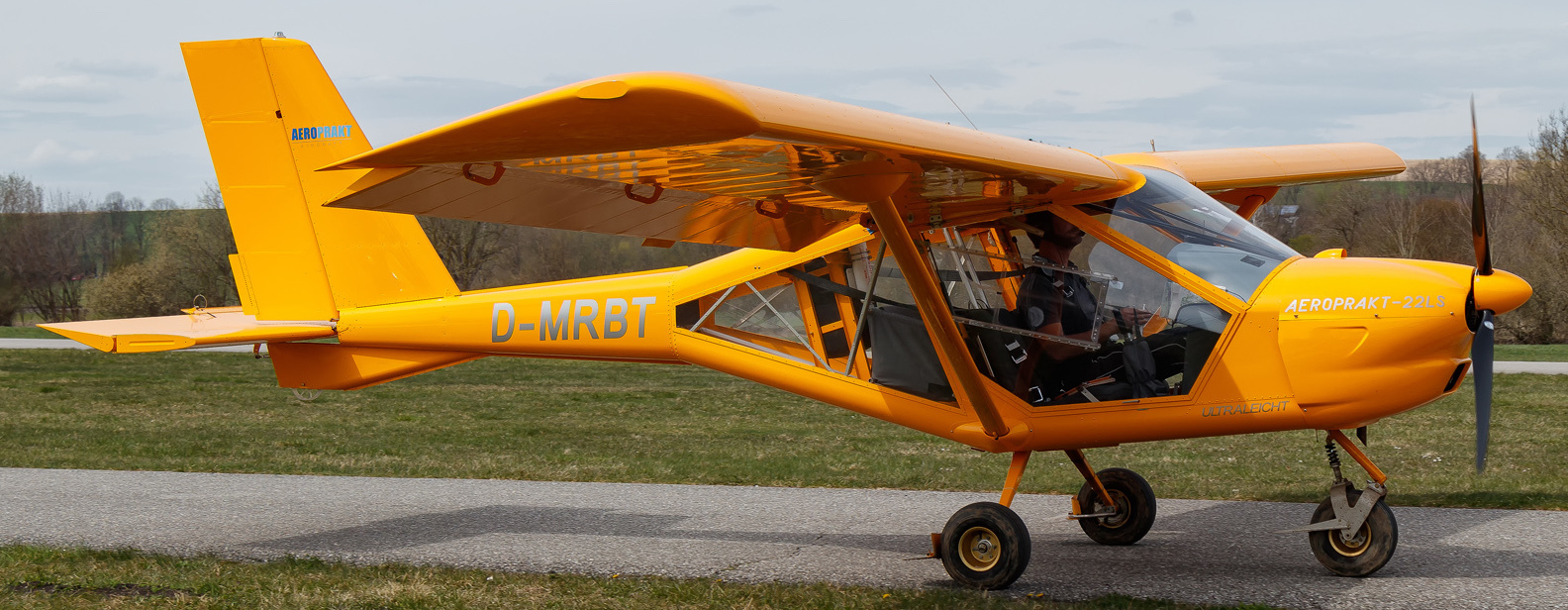
Flying is not just operating controls. Here is what happens behind the gauges — with fuel, in the engine, with loading and with the question of who can actually see you. In brief, with my own drawings and the figures from the A22 flight manual.
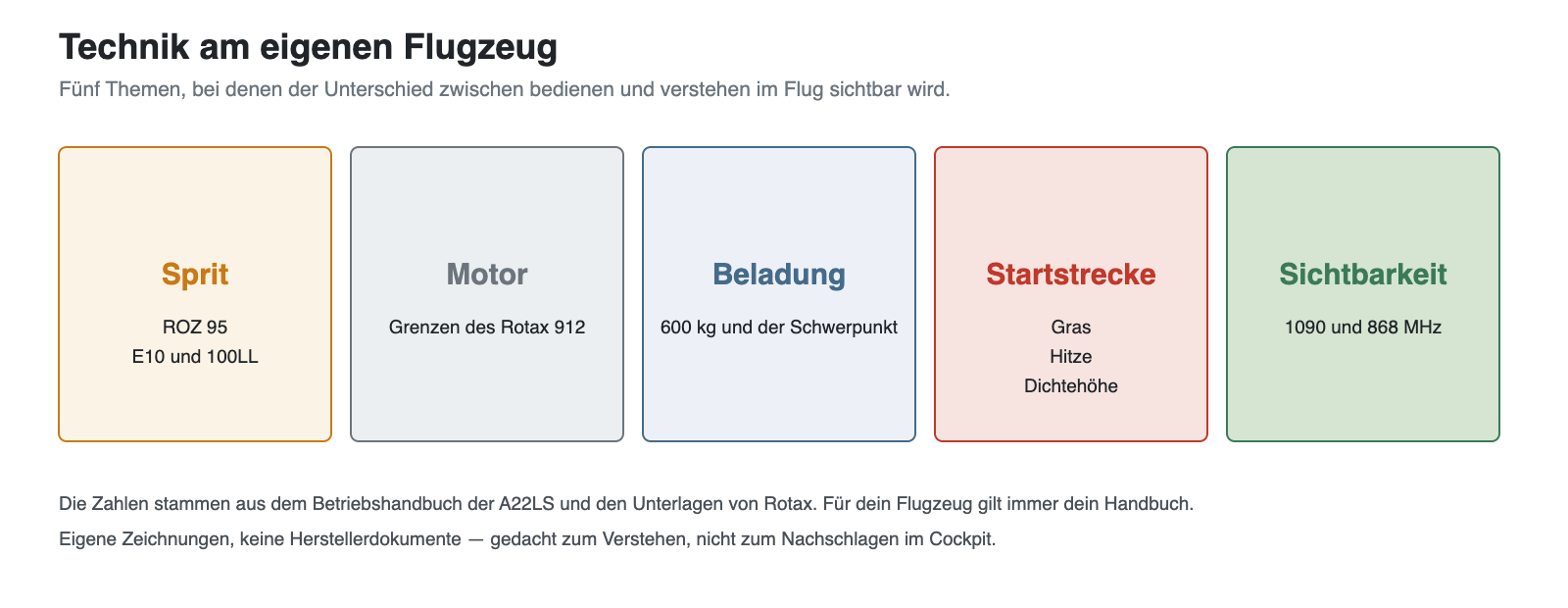
The topics
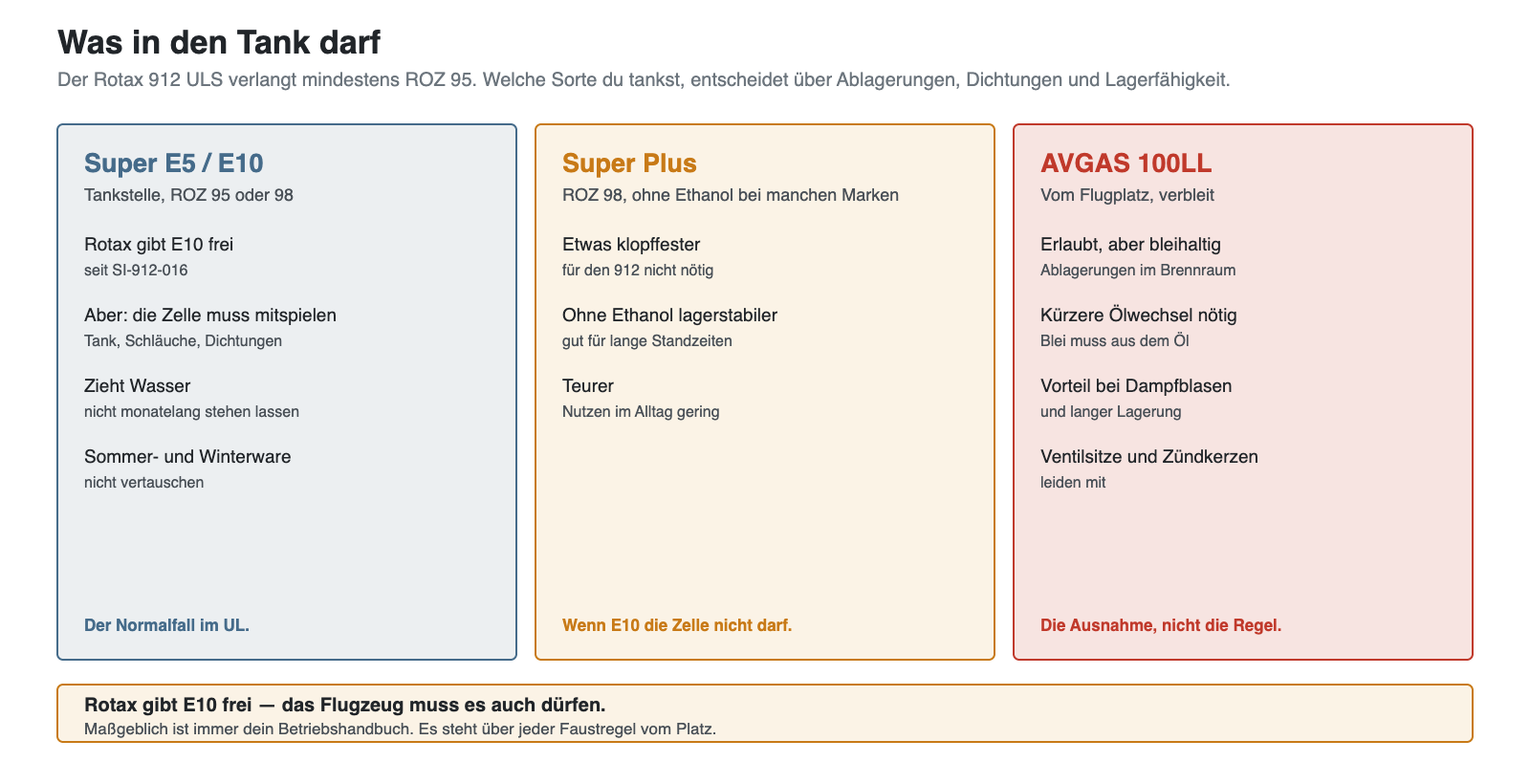
Fuel: What Can Go in the Tank
RON 95 as the minimum, E10 as a question for the airframe and AVGAS as a reserve — and why summer-grade fuel has no place in winter.
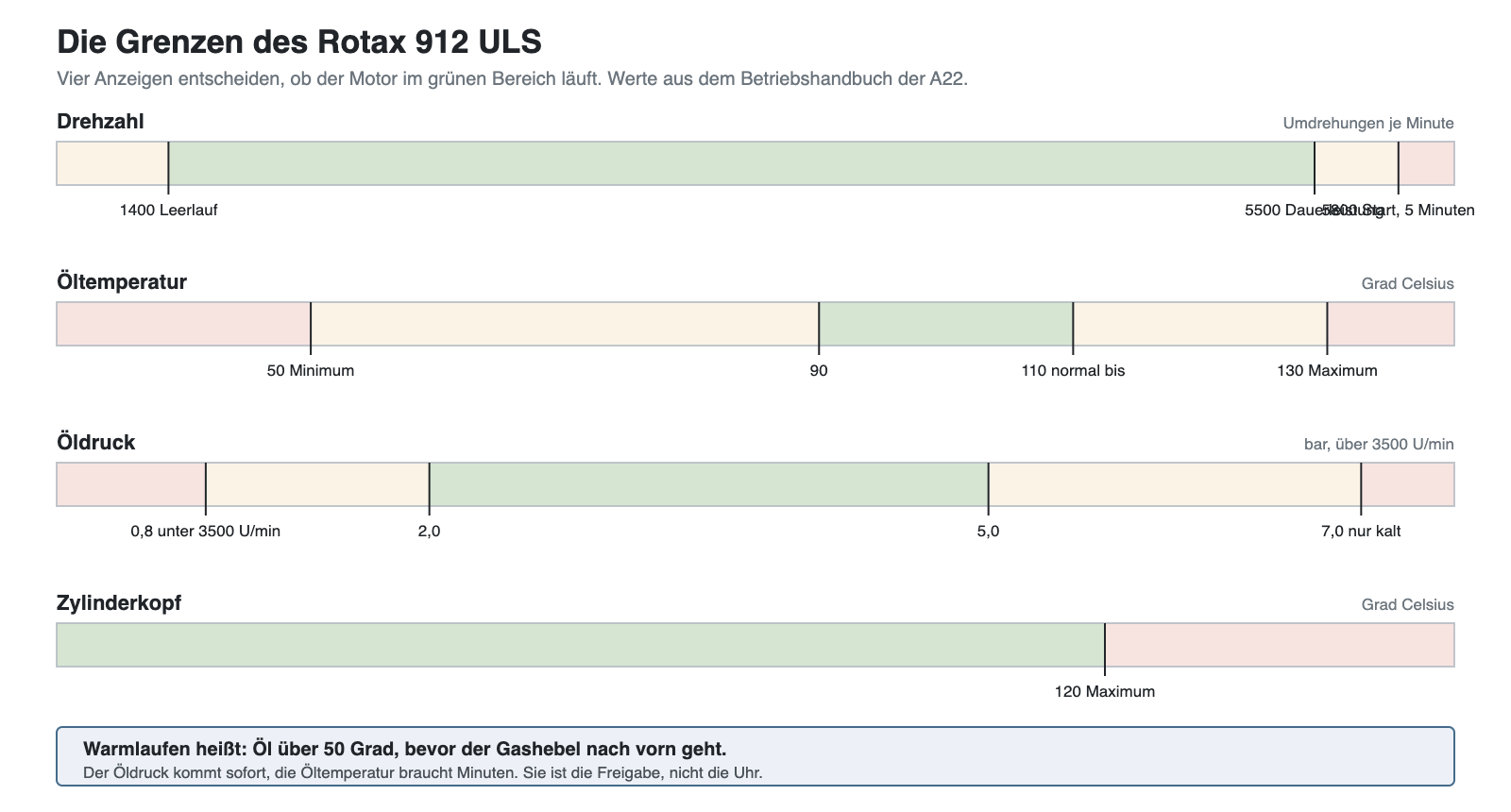
Understanding the Rotax
Four gauges, four limits: RPM, oil temperature, oil pressure and cylinder head. Why 50 degrees of oil temperature is a clearance.
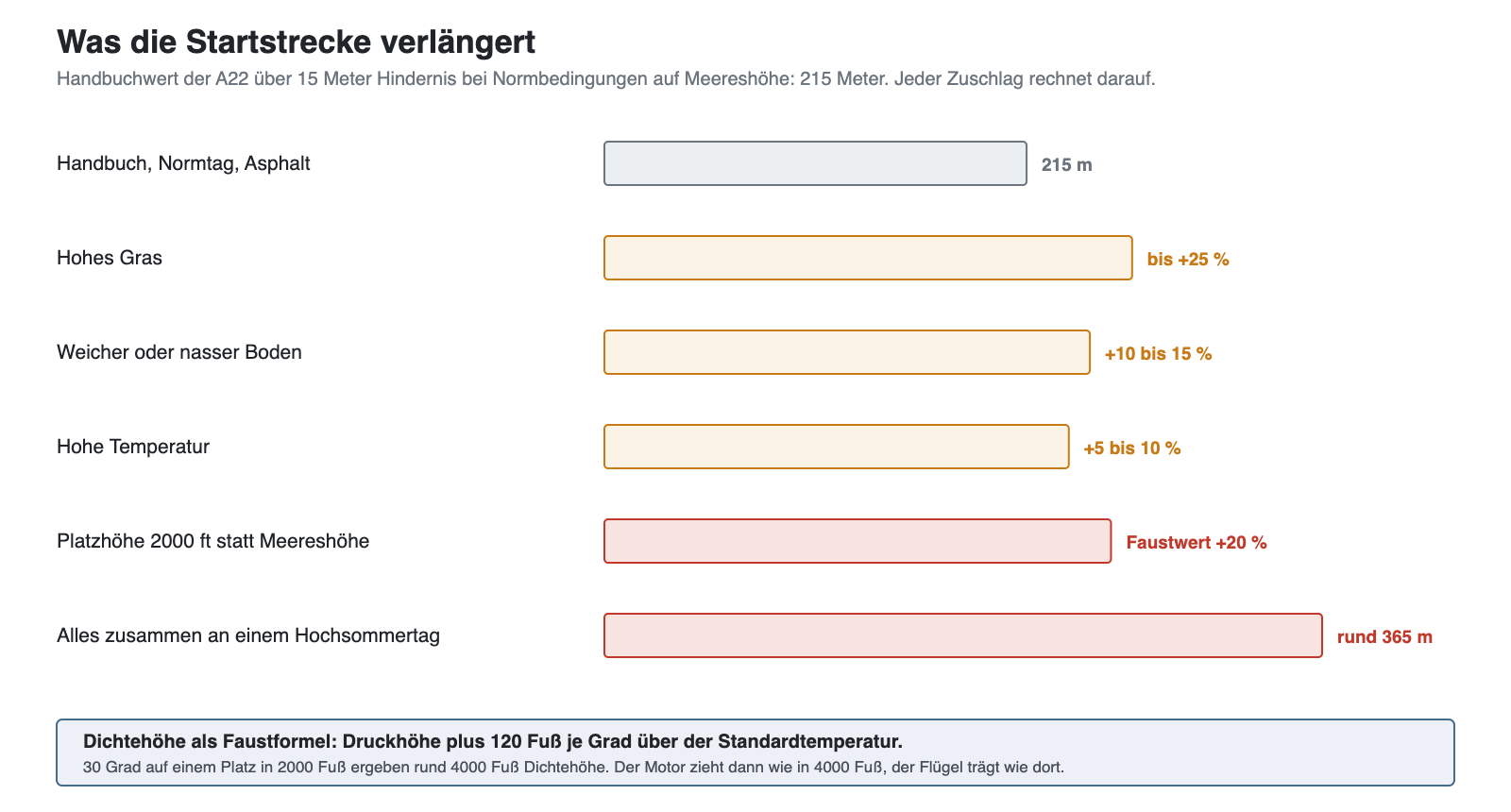
Take-off Distance and Density Altitude
215 metres is in the manual. What grass, heat and airfield elevation turn it into — and what the abort point is good for.
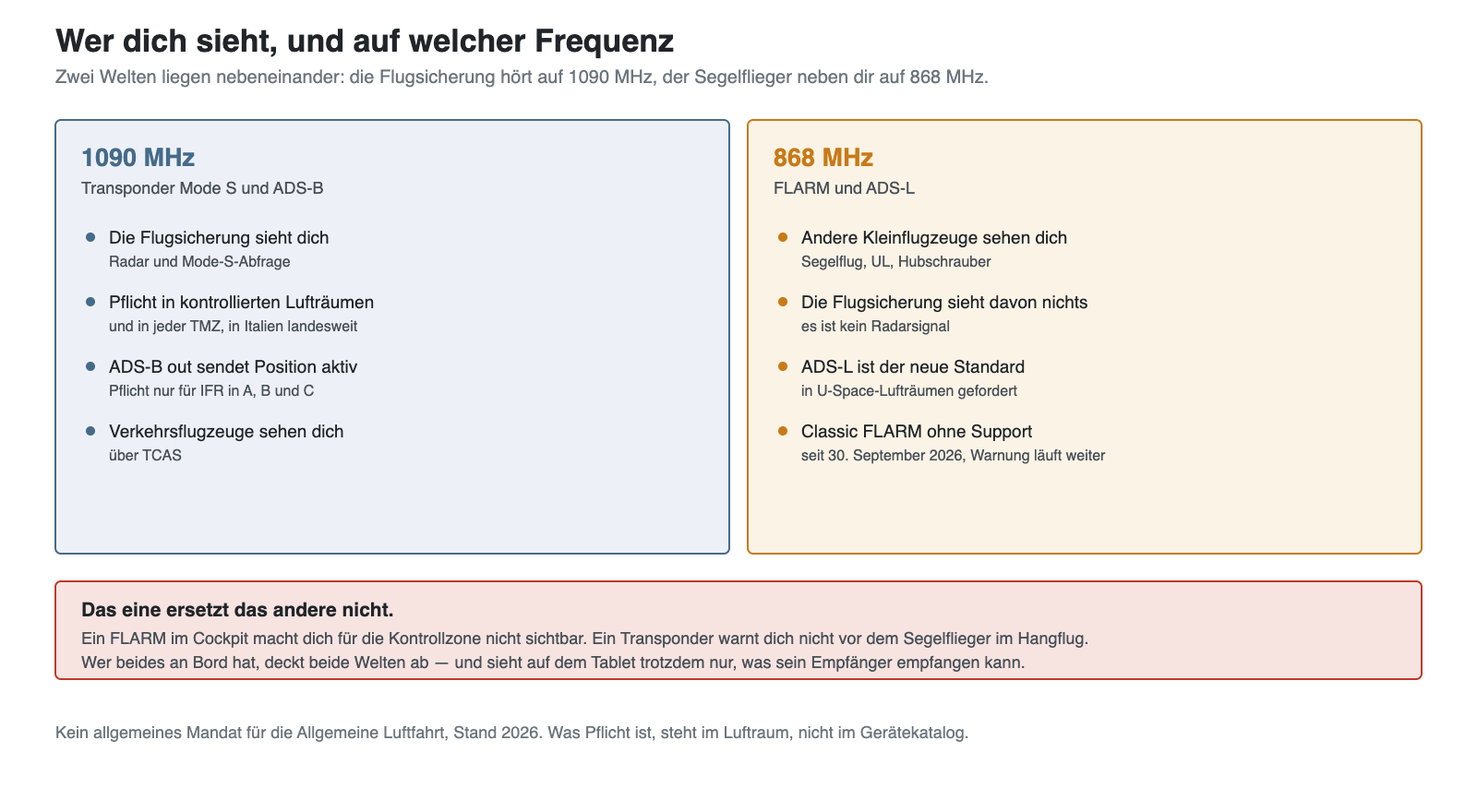
Being Seen
1090 megahertz for air traffic control, 868 for the traffic next to you. One does not replace the other.
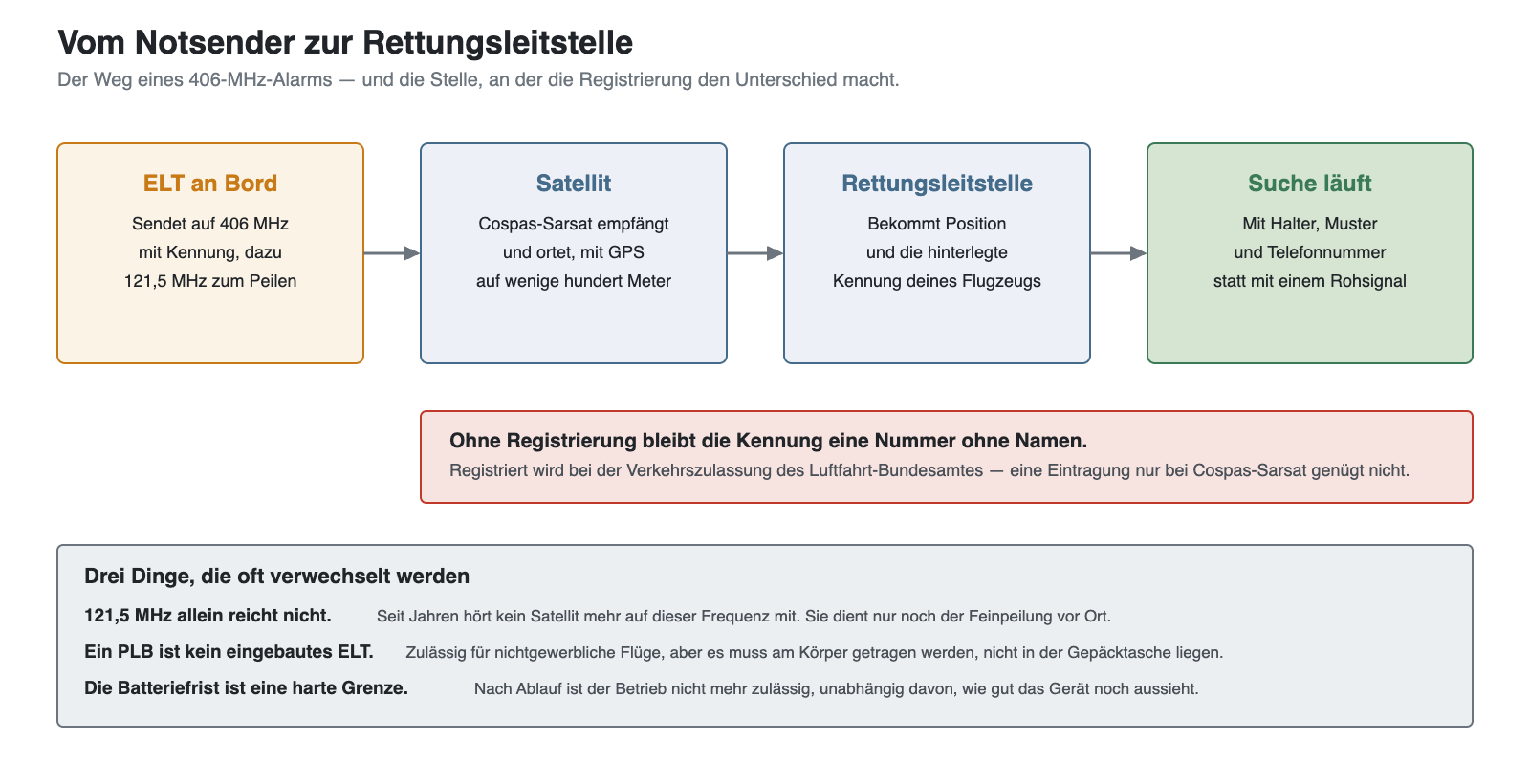
ELT and PLB
How a signal turns into a search, why registration is decisive and what the battery expiry date means.
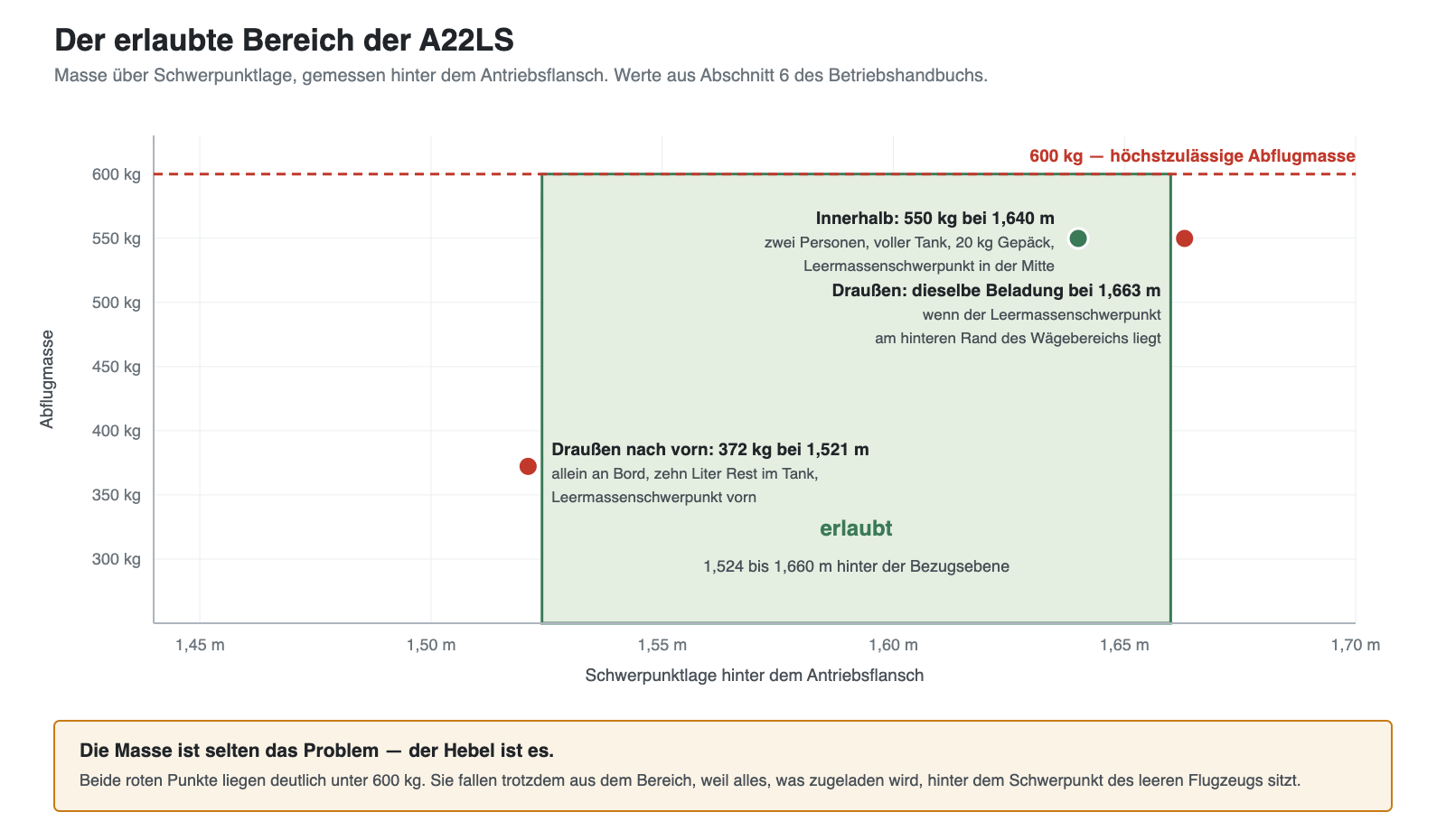
Loading and Centre of Gravity
600 kg is one limit, 1.524 to 1.660 m the other — and you can fall out of the CG envelope well below the maximum mass.
For all pages: the figures come from the A22LS operating manual and Rotax documentation, as of September 2026. For your aircraft, your manual applies — these pages explain, they replace nothing.
How it all fits together
The five topics are more closely linked than the headings suggest. The fuel determines how the engine works; the engine, together with air density and loading, determines how long the take-off run will be; and anyone taking off heavily loaded from a valley on a hot day has all three against them at once. Visibility stands alongside — it changes nothing about the physics, but everything about who knows about you.