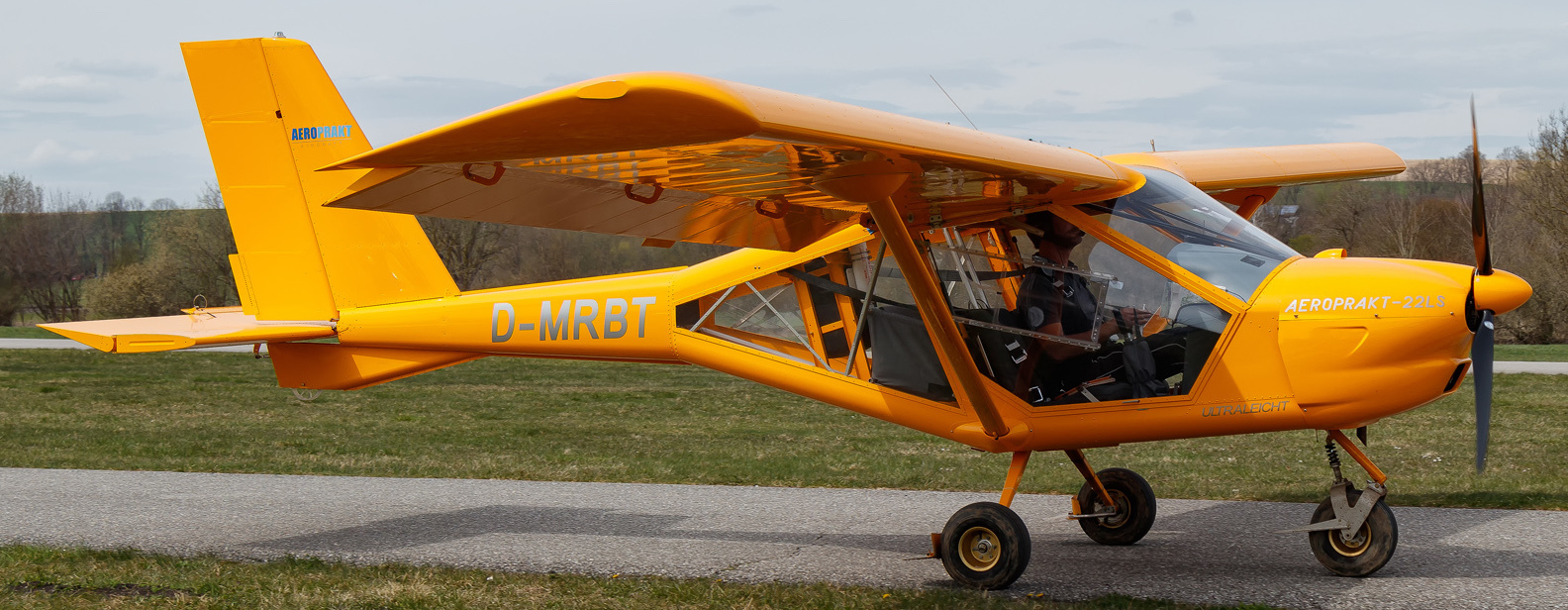
At airfields without air traffic services, the ground station has been called "Radio" instead of "Info" since 2023. The change of name is the smaller news. The bigger one is in the guidelines of 9 October 2024: they state how little such a station is allowed to say.
The callsign reveals the authority
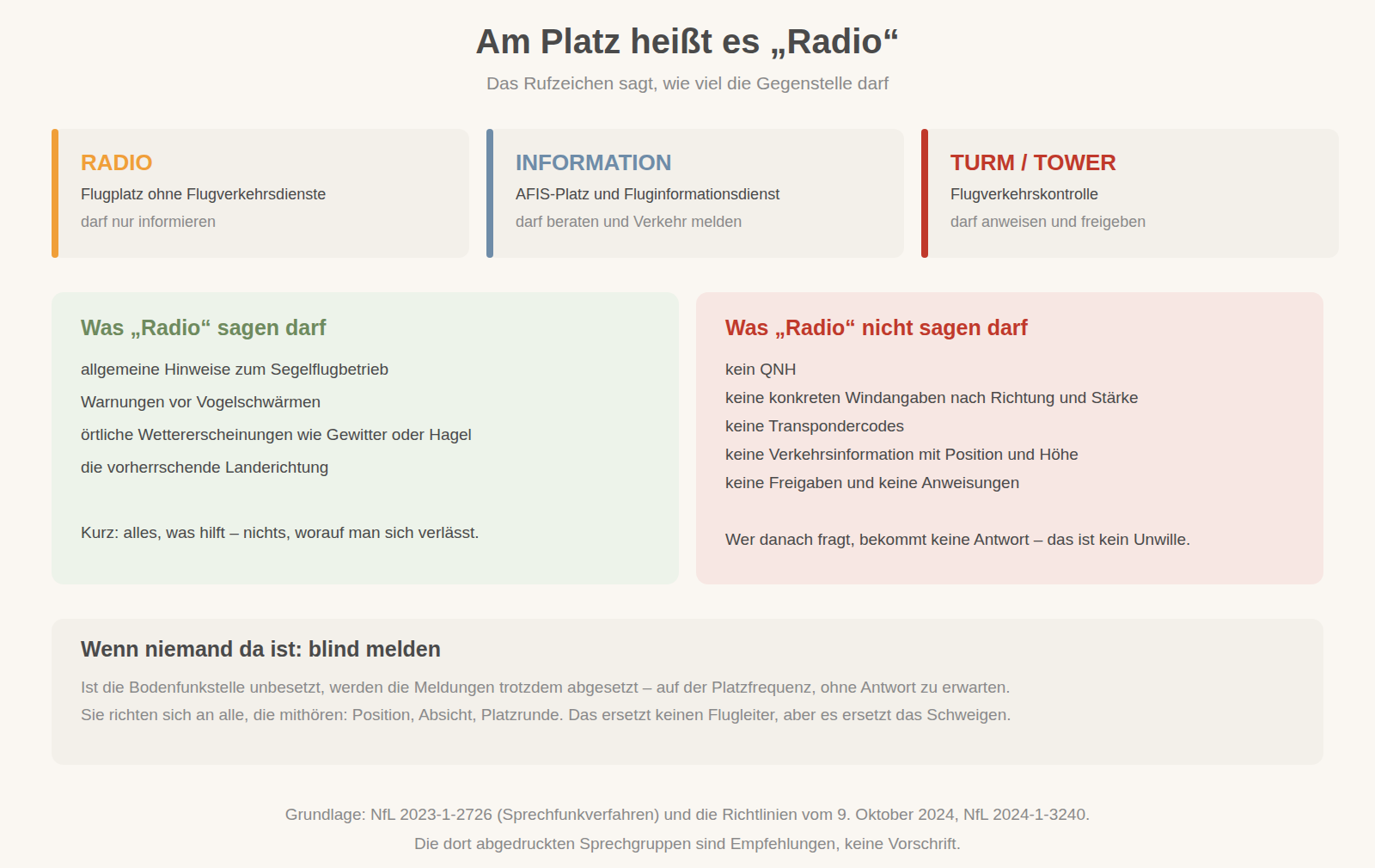
- RADIO – airfield without air traffic services. May inform, nothing more.
- INFORMATION – AFIS airfields and the flight information service. May advise and report traffic.
- TURM or TOWER – air traffic control. May instruct and clear.
In older documents and everyday language "Info" stubbornly survives. You will not be misunderstood because of it – but if you know the differences, you know what you can expect from the station.
What "Radio" may not say
A Radio station may not give instructions or provide information on which a procedure could be based. Explicitly excluded are QNH, specific wind information by direction and strength, transponder codes, traffic information with position and altitude and, of course, clearances.
Permitted and recommended are general notices: gliding activity, flocks of birds, local weather phenomena such as thunderstorms or hail, the predominant landing direction. If you ask for the QNH and get no answer, you are not dealing with an unwilling airfield operator but with a correctly operating ground station.
When nobody is there
If the ground station is unmanned, the reports are still made – blind, on the airfield frequency, without expecting an answer. They are addressed to everyone listening. That does not replace an operator, but it replaces silence, and at an airfield with gliding and towing that is the difference.
What this means for a flying day
- Get the QNH yourself, from the briefing or from a neighbouring airfield. The Radio station is not allowed to give it.
- Check the landing direction yourself. The windsock is the source, not the frequency.
- Take blind reports seriously – your own and those of others. At an unmanned airfield they are the only traffic information there is.
- Keep looking yourself even when you get an answer. A Radio station does not see everything and may not separate traffic.
Basis: NfL 2023-1-2726 (radiotelephony procedures) and the guidelines for radiotelephony at airfields without air traffic services of 9 October 2024, NfL 2024-1-3240. The phrases printed there are recommendations, not regulations.
Remember
"Radio" may help you but cannot promise you anything. Altitude, wind and landing direction remain your responsibility – even if someone is sitting at the microphone.